
A demolition contractor arrives at a site. The building is old. The owner wants it gone. The contractor walks through, takes some measurements, writes a quote, and schedules the excavator.
At no point does anyone ask what the building is made of.
This happens across Sydney more often than it should. Older homes, garages, sheds, commercial buildings, and industrial structures get demolished without anyone first confirming whether the materials contain asbestos. The consequences range from worker exposure and neighbourhood contamination to EPA prosecution and site remediation costs that dwarf the original demolition budget.
A pre-demolition asbestos survey prevents all of it. Here is why it should be a non-negotiable first step for every demolition project.
What a Pre-Demolition Asbestos Survey Is
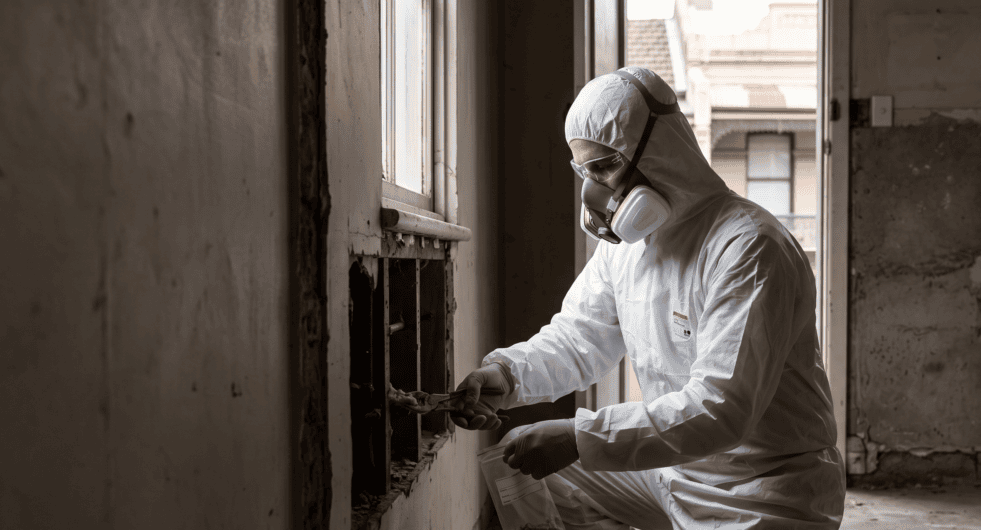
A pre-demolition asbestos survey (also called a refurbishment and demolition survey, or Type 3 survey) is a systematic inspection of a building scheduled for demolition or major renovation. The purpose is to locate and identify all asbestos-containing materials (ACMs) in the structure before any demolition work begins.
Unlike a standard management survey (which assesses accessible areas for ongoing building management), a pre-demolition survey is intrusive. The assessor opens wall cavities, lifts floor coverings, accesses ceiling spaces, inspects behind fixtures, and samples every material that could contain asbestos. The goal is to find everything, not just what is visible from the hallway.
The survey produces a report listing every identified ACM, its location, type (chrysotile, amosite, crocidolite), classification (bonded or friable), condition, and recommended removal method. This report becomes the foundation for the asbestos removal scope of work, which must be completed before the demolition contractor starts.
Why It Matters: The Regulatory Framework
NSW regulations create a clear sequence of obligations for anyone demolishing a building that may contain asbestos.
Identification obligation. Under Clause 425 of the Work Health and Safety Regulation 2017, a PCBU must identify whether asbestos or ACMs are present at a workplace before carrying out work that could disturb those materials. Demolition is, by definition, work that disturbs building materials. If the building was constructed or renovated before 31 December 2003, the PCBU must assume asbestos is present unless an identification process (survey and testing) confirms otherwise.
Removal before demolition. Under the Code of Practice for How to Safely Remove Asbestos, all asbestos must be removed from a structure before demolition begins, as far as is reasonably practicable. The removal must be done by a licensed asbestos removalist (Class A for friable, Class B for bonded) in accordance with the removal control plan.
Notification. The removalist must notify SafeWork NSW at least five days before starting friable asbestos removal or removal of more than 10 square metres of bonded asbestos. This notification includes details of the removal scope, methods, and safety controls.
Clearance. After removal, an independent licensed assessor must inspect the site and issue a clearance certificate before demolition proceeds. Air monitoring results support the clearance findings.
Waste management. Asbestos waste from the removal must be disposed of at an EPA-licensed facility with waste tracking documentation.
Only after all asbestos has been removed, cleared, and documented can the demolition contractor safely and legally proceed with the structural demolition.
What Happens When the Survey Is Skipped
When a demolition proceeds without a pre-demolition asbestos survey, the risks cascade.
Worker Exposure
Demolition workers operating excavators, bobcats, and hand tools on a building containing asbestos are directly exposed to airborne fibres. An excavator bucket smashing through a wall of asbestos cement sheeting generates a cloud of fibre-laden dust. Workers in the immediate area, including the machine operator, labourers, and anyone on the perimeter, inhale those fibres.
Unlike a controlled asbestos removal where materials are wetted, carefully handled, and contained, mechanical demolition maximises fibre release. The materials are crushed, dropped, and mixed with other debris. Dust suppression with water hoses helps but does not contain fibres the way a sealed enclosure does.
Neighbourhood Contamination
Demolition dust does not stay on site. Wind carries fibre-laden dust across property boundaries into neighbouring homes, gardens, playgrounds, and public spaces. In dense Sydney suburbs where houses are built close together, the neighbours are within metres of the demolition zone.
Complaints from neighbours about dust from a demolition site can trigger a SafeWork NSW or EPA investigation. If the investigation finds that asbestos-containing materials were demolished without prior removal, the enforcement response escalates rapidly.
Soil Contamination
When asbestos-containing materials are demolished and mixed with soil, the site becomes contaminated. Fragments of asbestos cement sheeting, friable insulation debris, and fibre-laden dust become mixed into the fill material on site.
This contamination affects future use of the site. If the owner plans to build a new structure, the contaminated soil may need to be excavated, tested, and disposed of as asbestos-contaminated waste before construction can proceed. Soil remediation costs for a residential site can range from $10,000 to $50,000 or more depending on the extent and depth of contamination.
Waste Stream Contamination
When asbestos materials are mixed with general demolition waste, the entire waste load becomes asbestos-contaminated. This means:
The waste cannot go to a standard construction and demolition recycling facility. It must go to an EPA-licensed asbestos disposal facility at higher disposal rates.
Any material that was mixed with the asbestos waste (timber, concrete, metal) loses its recyclable status. Material that could have been recycled at low or no cost now requires expensive disposal.
If the contaminated waste has already been delivered to a recycling facility that does not accept asbestos, the facility may refuse the load, charge contamination fees, or report the incident to the EPA.
Regulatory Consequences
Demolishing a building containing asbestos without a pre-demolition survey and licensed removal constitutes multiple potential breaches under the WHS Act 2011, the WHS Regulation 2017, and the Protection of the Environment Operations Act 1997.
The demolition contractor faces potential charges for conducting asbestos removal without a licence, failing to identify asbestos before demolition, and failing to manage health and safety risks.
The property owner faces potential charges as a PCBU who engaged a contractor without fulfilling their identification and management obligations.
Penalties for individuals and corporations under these Acts are substantial, ranging from tens of thousands to millions of dollars depending on the category of offence and the harm caused.
The Cost of a Survey vs. the Cost of Getting It Wrong
A pre-demolition asbestos survey for a standard residential property (house, garage, outbuildings) typically costs $500 to $2,000 depending on the size and complexity of the structures.
For a commercial or industrial building, survey costs range from $1,500 to $10,000 or more depending on the number of buildings, the floor area, and the complexity of the construction.
These costs are negligible relative to the total demolition budget. A residential demolition typically costs $15,000 to $40,000 or more including site clearance. A commercial demolition can run into hundreds of thousands. The survey cost represents 2 to 5% of the total project.
Compare that to the cost of getting it wrong:
| Consequence | Typical Cost |
|---|---|
| Site contamination assessment | $2,000 to $5,000 |
| Soil remediation | $10,000 to $50,000+ |
| Contaminated waste re-disposal | $5,000 to $15,000 |
| SafeWork NSW penalty (individual) | $3,600 to $301,355 |
| EPA penalty (illegal disposal) | $15,000 to $1,000,000 |
| Workers compensation claim | Variable, potentially $100,000+ |
| Project delay | 4 to 12 weeks |
The survey is the cheapest line item in a demolition budget. It is also the one that prevents every cost in the table above.
What Demolition Contractors Should Be Asking
Professional demolition contractors understand the regulatory framework and will not proceed without an asbestos survey. If your demolition contractor does not ask about asbestos before quoting, that is a red flag.
A professional contractor will:
Ask whether the building has been surveyed for asbestos. If not, they will recommend a survey before providing a demolition quote.
Request a copy of the asbestos survey report. They need the report to understand what materials are present and to coordinate their work with the asbestos removalist.
Confirm that asbestos removal will be completed before they arrive. They will want to see the clearance certificate before their crew enters the site.
Price their quote based on the waste stream. If asbestos has been removed prior, the demolition waste is clean and can be disposed of at standard rates. If asbestos remains (which it should not, but some contractors encounter undocumented materials), they will adjust their pricing and procedures.
If a demolition contractor quotes a job on a pre-1990 building without mentioning asbestos, they are either unaware of their obligations or willing to ignore them. Neither option is acceptable.
What You Should Do as a Property Owner
If you are planning to demolish any structure built before 2004 in Sydney or NSW, follow this sequence.
- Engage a licensed assessor for a pre-demolition asbestos survey. This is the starting point. The survey identifies what is there before anything is touched.
- Review the survey report. Understand what materials contain asbestos, where they are, and whether they are bonded or friable.
- Engage a licensed asbestos removalist. The removalist will prepare a removal control plan, notify SafeWork NSW if required, and schedule the removal work.
- Complete asbestos removal and obtain a clearance certificate. The independent assessor inspects the site and confirms all ACMs have been removed.
- Engage the demolition contractor. Provide them with the clearance certificate and the survey report. The demolition can proceed on a clean site.
- File all documentation. Keep the survey report, clearance certificate, air monitoring results, and waste disposal records with your property records.
This sequence protects your workers, your neighbours, your site, and your liability. It adds a small cost and a short timeline to the project. It prevents every worst-case scenario described above.
Contact Hazardous Removal Company for pre-demolition asbestos surveys, removal, and clearance across Sydney and NSW. We hold SafeWork NSW licence AD213403 and coordinate with demolition contractors to keep your project on track.