
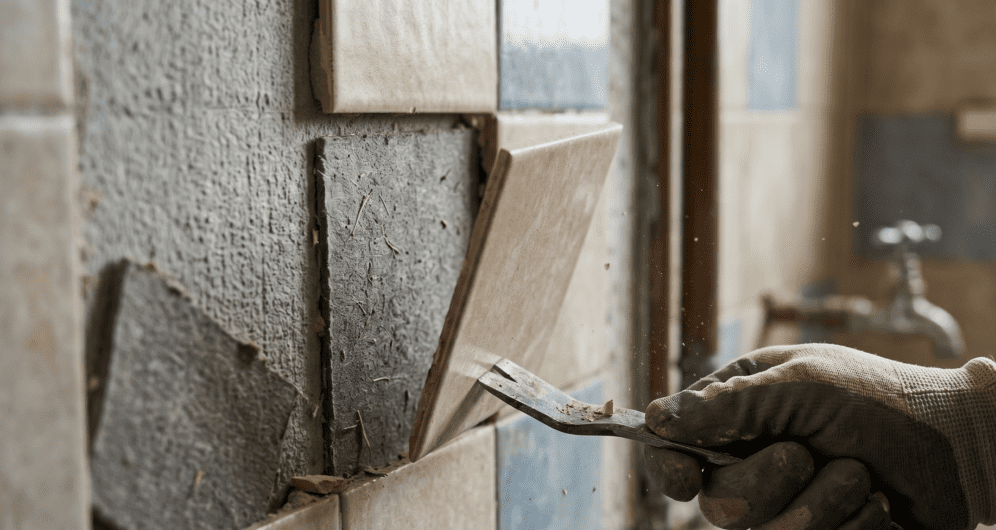
The bathroom is the most popular renovation project in Australia. It is also the room where asbestos is most likely to be hiding in plain sight in homes built before 1990.
That combination creates a predictable problem. Thousands of Sydney homeowners start bathroom renovations every year without testing for asbestos first. Many of them discover it mid-project, after walls have already been opened and materials disturbed. Some never discover it at all and unknowingly expose themselves and their families to airborne fibres.
Here is why bathrooms in older Sydney homes are high-risk zones for asbestos, and what you need to know before you pick up a hammer or hire a contractor.
Why Bathrooms Were Built With Asbestos
Asbestos cement sheeting was the ideal bathroom building material from the 1940s through the mid-1980s. It was water-resistant, fire-resistant, rigid, and cheap. Manufacturers marketed it specifically for wet area applications where standard plasterboard would fail.
In homes built during this period, asbestos cement was used in bathrooms in several specific ways.
Wall linings (substrate behind tiles). Flat asbestos cement sheets were installed as the substrate for ceramic tile adhesion. The tiles were glued or cemented directly onto the asbestos sheet. This means the asbestos is invisible from inside the bathroom. You see tiles. The asbestos is behind them.
Ceiling sheets. Bathroom ceilings in fibro homes were often lined with the same asbestos cement sheeting used for walls. In some homes, the ceiling was painted or coated with a textured finish, further disguising the underlying material.
Floor backing. In some constructions, asbestos cement sheets were used as a sub-floor layer beneath vinyl flooring or tiles. The asbestos is sandwiched between the structural floor and the visible floor finish.
Vinyl floor tiles and adhesives. Vinyl tiles installed before the mid-1980s frequently contain asbestos in the tile body itself. The black adhesive (mastic) used to bond these tiles to the subfloor is another common asbestos source.
Waterproofing membranes. Some older waterproofing products and sealants contained asbestos fibres as a reinforcing agent. These products were applied behind walls and under floors where they are completely inaccessible without demolition.
Pipe insulation and lagging. Hot water pipes running through or beneath the bathroom may be insulated with asbestos-containing lagging. This is more common in homes with centralised hot water systems where pipes run through wall cavities and floor spaces.
The result is that a single pre-1990 bathroom can contain asbestos in five or six different materials, all hidden behind the visible surfaces.
The Renovation Trigger
A typical bathroom renovation in Sydney involves stripping the room back to the structural frame. Tiles are removed from walls. The substrate behind the tiles is exposed. Old flooring comes up. The ceiling may be replaced. Plumbing is moved or replaced.
Every one of these activities disturbs the materials listed above. If those materials contain asbestos, the disturbance releases fibres.
The standard demolition tools used in bathroom strip-outs make the problem worse. Angle grinders, reciprocating saws, crowbars, and hammer drills all generate dust and break materials into fragments. When those materials contain asbestos, the dust contains fibres.
Without prior testing, neither the homeowner nor the renovation contractor knows what they are cutting into until the material is already broken.
What Makes Bathrooms Higher Risk Than Other Rooms
Several factors combine to make bathroom renovations particularly risky when asbestos is present.
Enclosed space. Bathrooms are small, enclosed rooms with limited ventilation. Fibres released during demolition concentrate in the air faster than they would in a larger, open room. With the door closed and an exhaust fan running (which may recirculate contaminated air through ducting), fibre concentrations can reach hazardous levels within minutes.
Multiple asbestos layers. Unlike a garage or eave where there might be one sheet of asbestos cement, a bathroom can contain asbestos in walls, ceiling, floor, adhesive, and waterproofing simultaneously. Disturbing any one layer can contaminate the others.
Adjacent living spaces. Bathrooms are connected to bedrooms, hallways, and living areas. Fibres generated during bathroom demolition travel through doorways, gaps around plumbing penetrations, and shared wall cavities. If the bathroom shares a wall with a bedroom, contamination can spread to the sleeping environment.
Duration of exposure. A bathroom strip-out typically takes one to two days. If asbestos is being disturbed throughout that process without containment, the exposure is not a single brief event. It is sustained across the full working period, affecting everyone in the home.
The Common Scenario
This scenario plays out regularly across Sydney. A homeowner in a 1975 fibro home in Penrith, Canterbury-Bankstown, or the Sutherland Shire decides to renovate the main bathroom. They get quotes from three bathroom renovation companies. None of them ask whether the home has been tested for asbestos.
The contractor starts demolition. They pull tiles off the wall and notice the sheeting underneath looks like cement board. Maybe they recognise it. Maybe they do not. If they recognise it, work stops and the homeowner faces an unplanned asbestos removal cost plus a project delay of one to three weeks. If they do not recognise it, the sheeting gets broken up and thrown in the skip bin with everything else.
In the first scenario, the homeowner loses time and money. In the second scenario, they lose their safety margin. Both scenarios are avoidable.
How to Renovate a Pre-1990 Bathroom Safely
The process for safely renovating a bathroom in an older Sydney home follows a clear sequence.
Step 1: Test Before Anything Else
Before engaging a renovation contractor, arrange asbestos sample testing on the materials in the bathroom. A licensed assessor will take small samples from the wall substrate, ceiling, flooring, and any other suspect materials. These samples go to a NATA-accredited laboratory for analysis.
Testing costs for a single bathroom typically range from $200 to $400 depending on the number of samples. Results take three to five business days for standard service.
Step 2: Review the Results
If all samples return as “No Asbestos Detected,” you can proceed with the renovation normally. Keep the lab report on file.
If asbestos is detected in one or more materials, you now know exactly what needs to be removed before the renovation contractor starts. This knowledge lets you plan the budget and timeline accurately.
Step 3: Remove Asbestos Before Renovation
A licensed asbestos removalist strips the asbestos-containing materials from the bathroom under controlled conditions. This means containment of the work area, PPE for workers, wetting of materials, careful removal without power tools, sealed waste packaging, and decontamination of the room after removal.
For a standard bathroom, this process typically takes one to two days.
Step 4: Get the Clearance Certificate
After removal, an independent licensed assessor inspects the bathroom and issues a clearance certificate confirming the area meets safe reoccupation standards. Air monitoring results may also be included depending on the scope of work.
This certificate is your proof that the bathroom is safe for the renovation contractor to enter and begin their work.
Step 5: Hand Over to the Renovation Contractor
The renovation contractor receives a clean, asbestos-free room to work in. They can use their standard tools and methods without risk of fibre exposure. The project proceeds on the planned timeline and budget.
The Cost of Testing vs. the Cost of Surprises
Testing a bathroom before renovation adds $200 to $400 to the project budget. If asbestos is found, planned removal adds $1,500 to $4,000 depending on the quantity and type of material.
Discovering asbestos mid-renovation adds the same removal cost plus project delays, contractor remobilisation fees, and potential decontamination costs that can push the total additional expense well beyond $10,000.
The numbers consistently show that testing before renovation is the lower-cost approach. Every time.
What to Ask Your Bathroom Renovation Contractor
Before you sign a renovation contract for any bathroom in a pre-1990 Sydney home, ask these questions:
“Have you checked whether the bathroom materials contain asbestos?” If the contractor says no, arrange testing before signing.
“What is your procedure if asbestos is found during demolition?” A professional contractor will have a clear answer: stop work, notify the homeowner, and wait for a licensed removalist. If they do not have a procedure, reconsider.
“Is asbestos removal included in your quote?” Most renovation contractors do not hold asbestos removal licences. Removal is a separate scope of work by a specialist. Make sure both costs are accounted for in your total budget.
“Can you work with my asbestos removalist on scheduling?” The best outcome is coordinating the removal and renovation schedules so one follows the other without unnecessary gaps.
Protect Your Family and Your Budget
Bathroom renovations in pre-1990 Sydney homes carry asbestos risks that are predictable and manageable. The materials are in known locations. The testing methods are proven. The removal process is straightforward when planned in advance.
The only risk that is hard to manage is the one you did not test for.
Contact Hazardous Removal Company to arrange bathroom asbestos testing or removal before your renovation starts. We hold SafeWork NSW licence AD213403 and service the entire Sydney region.