
Before you renovate, demolish or buy a property in Sydney, you need to know whether asbestos is present. An asbestos inspection gives you that answer. Hazardous Removal Company provides professional asbestos inspections for homes, commercial buildings and workplaces across Sydney and NSW, with detailed reports and fast turnaround.
What Is an Asbestos Inspection
An asbestos inspection is a thorough physical assessment of a building to identify any materials that may contain asbestos. A licensed assessor examines accessible areas of the property, records the location and condition of suspected materials, and collects samples for laboratory analysis where needed.
The inspection covers both visible and concealed areas where asbestos-containing materials are commonly found. This includes wall and ceiling sheeting, eaves, soffits, vinyl flooring, pipe lagging, electrical backing boards, roof sheeting, wet areas and fencing.
The result is a written report that tells you exactly what is present, where it is located and what condition it is in. This report forms the basis for any decisions about removal, encapsulation or ongoing management.
Types of Asbestos Inspections We Provide
Pre-renovation inspections. If you are planning any renovation work on a property built before 1990, a pre-renovation asbestos inspection is the safest first step. It identifies materials that could be disturbed during the works so you can plan removal before construction begins. This is the most common inspection type we carry out for Sydney homeowners.
Pre-purchase inspections. Buying a home or commercial property built before 1990 carries a risk of hidden asbestos. A pre-purchase asbestos survey gives you a clear picture of what is present before you commit. The report can also be used to negotiate on price or plan future remediation costs.
Workplace and commercial inspections. Under the Work Health and Safety Regulation 2017, any workplace built before 2004 must have an asbestos register that is kept up to date. Our commercial inspections identify asbestos-containing materials across offices, factories, warehouses and retail spaces so you meet your legal obligations. Learn more about asbestos registers and how they work.
Condition assessments. If your property already has a known asbestos presence, periodic condition assessments check whether materials have deteriorated since the last inspection. Damaged or weathered asbestos poses a higher risk of fibre release and may require removal or encapsulation.
How Our Inspection Process Works
Step 1: Booking. Call us on 0452 224 398 or submit an enquiry through our contact page. We respond within 24 hours and schedule the inspection at a time that works for you.
Step 2: On-site assessment. A licensed assessor attends your property and conducts a visual inspection of all accessible areas. They identify materials that are likely to contain asbestos based on their appearance, age and location within the building.
Step 3: Sample collection. Where visual identification alone is not enough, the assessor collects small samples from suspect materials. Samples are taken safely using proper containment methods to prevent fibre release. Learn more about our sample testing procedures.
Step 4: Laboratory analysis. Samples are sent to a NATA-accredited laboratory for analysis. The lab confirms whether asbestos is present and identifies the type, whether chrysotile, amosite, crocidolite or a combination. Find out how asbestos testing works.
Step 5: Written report. You receive a detailed report covering the location of all identified materials, their condition, the type of asbestos confirmed by lab results, and recommendations for management or removal. For commercial properties, this report feeds directly into your asbestos register.
When You Need an Asbestos Inspection
You should book an asbestos inspection if your property was built before 1990 and you are planning any renovation, demolition or maintenance work that could disturb building materials. You should also book one if you are purchasing a property and want to understand what you are buying, if you manage a commercial building and need to create or update an asbestos register, or if you have noticed damaged or deteriorating fibro, ceiling tiles or vinyl flooring in an older building.
Under NSW law, asbestos must be identified before it can be safely removed. Skipping the inspection step and going straight to removal creates a risk of disturbing materials without proper containment, which can expose you, your family or your workers to airborne fibres.
Frequently Asked Questions
The on-site inspection typically takes one to two hours depending on the size of the property. Laboratory results are usually available within a few business days, with the written report delivered shortly after.
Service
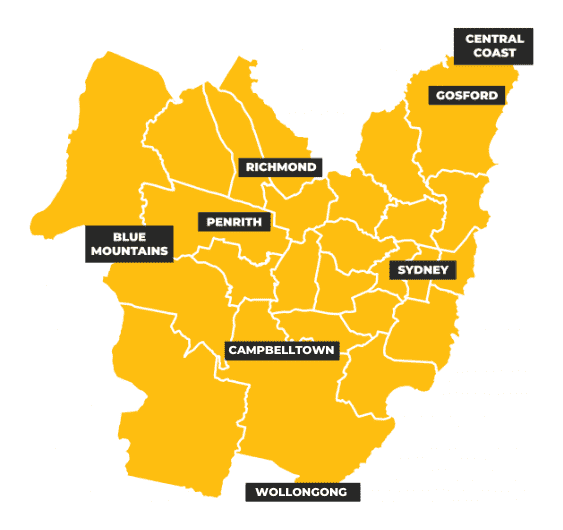
Areas we
Sydney’s housing stock, particularly fibro homes in Western Sydney, Macarthur, the Inner West and the Northern Suburbs, was heavily built with asbestos-containing materials. The most common locations include bathroom walls and ceilings, garage wall cladding, eaves and soffits, laundry linings, kitchen splashbacks, roof sheeting, and fencing.
If your home was built between the 1940s and 1980s, it is very likely that at least some of these areas contain asbestos. Even homes renovated in the 1990s may still have original asbestos materials behind newer finishes.
Call us today:
Send an enquiry
We respond to enquiries within 24 hours.