
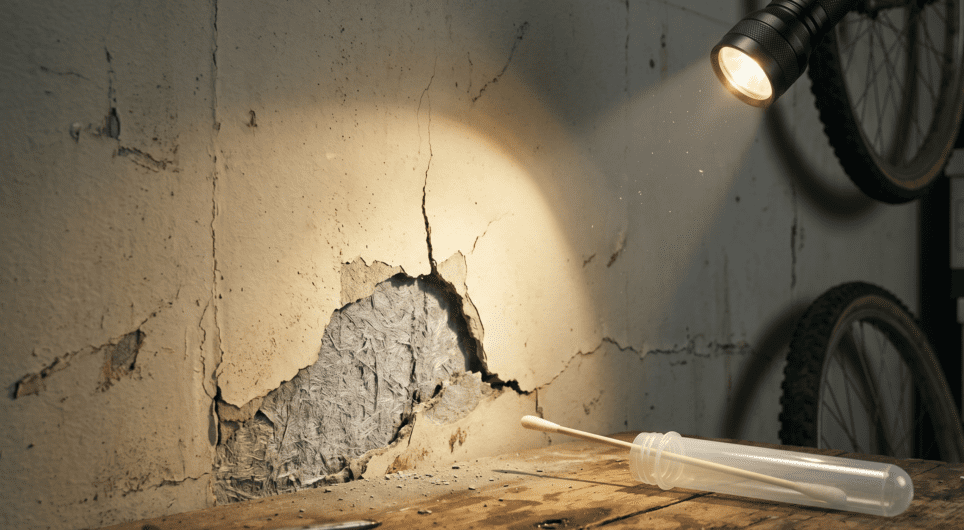
When homeowners think about asbestos risk in their home, they think about bathrooms, kitchens, and living areas. The rooms where families spend the most time. The rooms they are most likely to renovate.
The garage barely registers.
That is a mistake. In pre-1990 Sydney homes, the garage is often the room with the most asbestos, in the worst condition, with the least attention paid to it. It sits there for decades, deteriorating quietly, while the homeowner worries about the bathroom walls.
Here is why the garage deserves more concern than it gets, and what to do about it.
Why Garages Are Full of Asbestos
The garage was built to be functional, not comfortable. It did not need insulation, decorative finishes, or premium materials. It needed walls, a roof, and a door. Builders reached for the cheapest, most durable option available: asbestos cement sheeting.
In homes built between the 1940s and mid-1980s across Sydney, garage walls and ceilings were commonly lined with flat asbestos cement sheets (fibro). Corrugated asbestos cement was used for garage roofing in many properties. In some constructions, the garage was essentially built entirely from asbestos-containing materials from the slab up.
The quantity of asbestos in a typical single garage is significant. Four walls and a ceiling in a standard single garage represent 30 to 50 square metres of sheeting. A double garage can contain 50 to 80 square metres or more. That is substantially more asbestos material by area than the average bathroom, kitchen, or laundry in the same home.
Why Garage Asbestos Deteriorates Faster
The materials in a garage break down faster than the same materials in a climate-controlled living space. Several factors drive this.
Temperature cycling. Garages are not insulated or climate-controlled. In Sydney, summer temperatures inside an unventilated garage can exceed 45 degrees Celsius. Winter nights drop below 10 degrees. This daily and seasonal temperature cycling causes expansion and contraction in cement sheeting, accelerating cracking and surface degradation over time.
Moisture exposure. Garages are more exposed to moisture than interior rooms. Rain blows in through gaps around the door. Condensation forms on cold surfaces during temperature changes. In some properties, the garage floor has no drainage and water pools against the base of wall sheeting. Prolonged moisture contact weakens the cement matrix that binds asbestos fibres, making the material more likely to release fibres when disturbed.
Physical damage. Garages take physical abuse that interior rooms do not. Car doors swing into walls. Ladders, tools, bikes, and storage items lean against and impact wall sheeting. Lawnmowers and garden equipment get stored against walls. Over years, this accumulation of minor impacts creates chips, cracks, and broken edges in asbestos cement sheeting. Each break exposes raw asbestos fibres at the damaged surface.
Vibration. The daily opening and closing of a roller door or tilt-a-door creates vibration through the garage structure. In older garages where sheeting is nailed directly to timber framing, this vibration loosens fixings and creates stress cracks around nail holes. Cracked sheeting around fixings is a common finding during garage asbestos assessments.
Neglect. Interior rooms get painted, maintained, and renovated. Garages do not. Many garage linings have not been painted or inspected since the house was built. The protective surface coating (if one was ever applied) has long since weathered away, leaving the raw cement matrix exposed to all of the factors above.
The result is that garage asbestos is often in significantly worse condition than asbestos in the rest of the home. Material that was installed as stable, bonded asbestos cement 40 or 50 years ago may now be cracked, weathered, and approaching the threshold where it can release fibres without being mechanically disturbed.
The “It’s Just a Garage” Problem
The biggest risk factor with garage asbestos is not the material itself. It is the attitude that surrounds it.
Homeowners and tradespeople treat garages differently from living spaces. They drill into walls to mount shelving without checking what the wall is made of. They lean heavy items against sheeting without worrying about cracks. They sweep the garage floor, sending dust (potentially containing asbestos fibres from deteriorated sheeting) into the air and out the open door.
Children play in garages. Home workshops operate in garages. Gym equipment gets set up in garages. In many Sydney homes, the garage has become an extension of the living space without any of the safety considerations that would apply if the same activities happened inside the house.
When it comes time to renovate or demolish the garage, the casual attitude often continues. Homeowners pull down sheeting themselves, break it up, and load it into a skip bin or trailer without testing it first. The assumption is that garage materials are low-priority and not worth the cost of professional assessment.
That assumption is wrong. The garage often contains more asbestos in worse condition than any other part of the property.
What Happens When a Garage Gets Demolished Without Testing
Garage demolitions and renovations are a common trigger for asbestos disturbance in Sydney. Homeowners converting garages into living spaces, replacing old garages with new structures, or simply clearing a dilapidated garage are all at risk if they skip the testing step.
When asbestos cement sheeting is broken during demolition, fibres are released into the air. The outdoor location of most garages means the fibres disperse more quickly than in an enclosed room, but the exposure is still real. Workers handling the material without PPE are directly exposed. Neighbours can be exposed if wind carries fibres across property boundaries. Garden soil around the garage can become contaminated with fibre fragments.
If the demolished material is mixed with general construction waste and placed in a skip bin, the entire skip load may be classified as asbestos-contaminated waste. The skip bin company can refuse to collect it, and the homeowner faces additional disposal costs at an EPA-licensed facility.
If the material is dumped illegally, which happens more often with garage waste than any other type, the homeowner faces fines of up to $1 million under the Protection of the Environment Operations Act 1997.
The Soil Contamination Risk
Garages present a unique contamination risk that interior rooms do not: soil contamination around the perimeter.
When asbestos cement sheeting deteriorates on the exterior of a garage, or when corrugated asbestos roofing weathers over decades, small fragments and fibres wash off the surface and accumulate in the soil at the base of the structure. Rain runoff from an asbestos cement roof carries fibres into garden beds, driveways, and lawn areas surrounding the garage.
This contamination is invisible. The fibres are microscopic and mixed into the top layer of soil. A homeowner digging a garden bed, laying pavers, or excavating for a new structure around the garage site can disturb contaminated soil without knowing it.
Soil contamination testing is a separate process from building material testing, but it is particularly relevant for properties where garage asbestos has been deteriorating for decades.
How to Handle Garage Asbestos Properly
If your Sydney home was built before 1990 and the garage has original wall or roof sheeting, here is the recommended approach.
Get it tested. Do not assume the garage materials are asbestos just because the house is old, and do not assume they are safe just because “it’s only the garage.” A sample test from a licensed assessor costs a few hundred dollars and gives you a definitive answer.
Assess the condition. If asbestos is confirmed, the assessor can evaluate the condition of the material. Sheeting that is intact, painted, and undamaged may not require immediate removal. Sheeting that is cracked, weathered, or physically damaged is a higher priority.
Plan removal before any renovation or demolition. If you are converting, renovating, or demolishing the garage, asbestos removal must happen first. A licensed asbestos removalist will strip the asbestos-containing materials under controlled conditions, dispose of the waste at a licensed facility, and provide a clearance certificate before any other work begins.
Do not DIY a garage demolition without testing. Even if the asbestos quantity falls under the 10 square metre threshold for self-removal, a garage demolition involving asbestos typically exceeds that limit. And the physical demolition process (breaking, dropping, loading sheeting) is exactly the type of disturbance that releases the most fibres.
Consider soil testing if the garage has been deteriorating. If the garage sheeting has been visibly weathering for years, ask your assessor about soil sampling around the perimeter. This is especially relevant if you plan to use the area for gardening, a children’s play space, or new construction after the garage is removed.
The Garage Deserves the Same Attention as the Bathroom
Sydney homeowners routinely spend $300 to $600 testing their bathroom for asbestos before a renovation. That is smart. But the same homeowners will demolish a garage full of 40 square metres of deteriorated asbestos cement without a second thought.
The garage contains more material, in worse condition, with a higher likelihood of fibre release during disturbance. It deserves at least the same level of attention and caution as any other part of the home.
Test it. Assess it. Handle it properly.
Contact Hazardous Removal Company for garage asbestos testing or removal across the Sydney region. We hold SafeWork NSW licence AD213403 and provide clearance certificates on every job.