
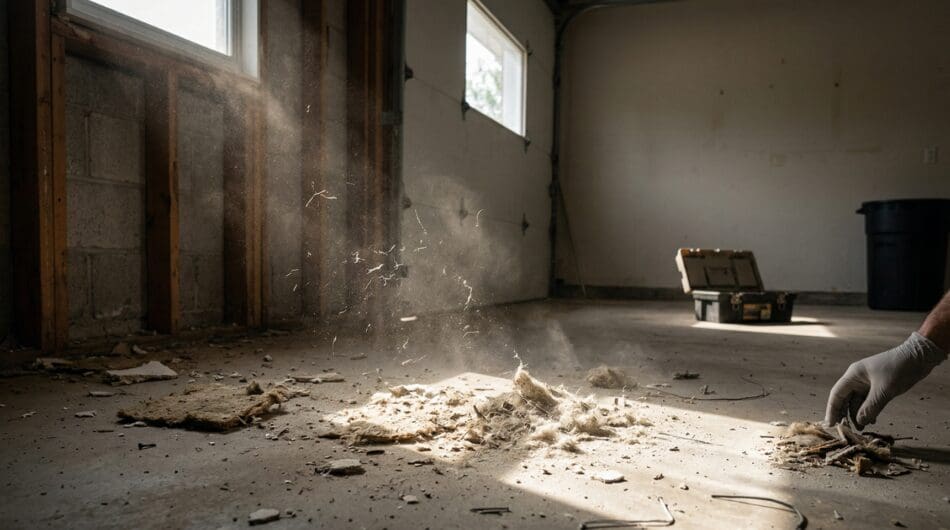
Every year in NSW, homeowners hire asbestos removalists who look professional, quote low, and promise quick results. Some of those operators are not licensed. Some hold a licence but do not follow the procedures that licence requires. The outcomes range from contaminated homes to EPA prosecutions and, in the worst cases, long-term health damage to families who thought the job was done properly.
This is not a scare tactic. It is a pattern documented in SafeWork NSW enforcement records, EPA prosecution summaries, and court decisions. The asbestos removal industry in Sydney has a quality problem, and homeowners pay the price when they do not know what to look for.
How Unlicensed Operators Get the Work
The typical unlicensed operator enters the market through one of three paths.
General demolition contractors who “add” asbestos removal. A demolition or building contractor encounters asbestos on a job site and decides to remove it rather than subcontract to a licensed removalist. This saves time and money for the contractor. It also breaks the law.
Handymen and renovation contractors. A homeowner mentions asbestos concerns during a bathroom or garage renovation. The contractor says, “Don’t worry, I’ll take care of it.” No licence. No air monitoring. No clearance certificate. The asbestos gets ripped out alongside the rest of the demolition waste.
Deliberately unlicensed operators advertising online. Some operators knowingly advertise asbestos removal services without holding a SafeWork NSW licence. They undercut licensed competitors on price because they skip the procedures that drive up legitimate costs: containment, decontamination, NATA-accredited lab testing, licensed assessor inspections, and EPA-approved disposal.
In all three cases, the homeowner often does not realise anything is wrong until after the job is done, or until a problem surfaces months later.
What “Cutting Corners” Actually Looks Like
Licensed asbestos removal in NSW follows a strict set of procedures mandated by the Work Health and Safety Regulation 2017 and the How to Safely Remove Asbestos Code of Practice. Each step exists for a reason. When operators skip steps, the consequences are specific and measurable.
No Asbestos Removal Control Plan
Before any licensed removal job begins, the removalist must prepare a written control plan detailing the scope of work, containment methods, PPE requirements, decontamination procedures, waste handling, and emergency protocols. Unlicensed operators do not prepare control plans. They show up, start removing, and figure it out as they go.
No Containment or Inadequate Containment
For larger removal jobs and all friable asbestos work, the removal area must be sealed with polyethylene sheeting to create a negative-pressure enclosure. This prevents fibres from escaping into adjacent rooms and the outdoor environment. Unlicensed operators often work in open areas with no barriers, spreading contamination throughout the property.
No Air Monitoring
Air monitoring during and after removal is the only way to confirm that airborne fibre levels are safe. The monitoring must be done by a NATA-accredited laboratory using membrane filter methods. Without this step, there is no objective measurement of whether the area is safe to reoccupy. Unlicensed operators skip air monitoring entirely because it requires a third-party assessor and adds cost.
No Clearance Inspection
After removal, a licensed assessor (independent from the removal contractor) must inspect the site and issue a clearance certificate confirming the area meets safe reoccupation standards. This certificate is a legal requirement for any job involving more than 10 square metres of bonded asbestos or any friable material. Unlicensed operators cannot produce a valid clearance certificate because no independent assessor was engaged.
Illegal Disposal
Asbestos waste must be transported by a licensed waste carrier and delivered to an EPA-licensed facility. Waste tracking documentation must be completed. This creates a paper trail from the removal site to the disposal point. Unlicensed operators frequently dispose of asbestos illegally: in general waste skip bins, vacant lots, bushland, or mixed into clean fill used on other sites. Illegal dumping of asbestos is one of the most prosecuted environmental offences in NSW.
Real Consequences for Homeowners
When an unlicensed operator finishes the job and leaves, the homeowner is left with several problems they may not discover for weeks, months, or years.
Residual contamination. Without proper containment and decontamination, asbestos fibres settle on surfaces throughout the property. Carpets, furniture, ducted air conditioning systems, and roof cavities can all harbour residual fibres. A subsequent renovation, carpet replacement, or air conditioning service can re-release those fibres into the living environment.
No documentation for property sale. When the homeowner eventually sells the property, the buyer (or their solicitor) may ask for evidence that asbestos was professionally removed. Without a clearance certificate, test results, and disposal records, the homeowner cannot prove the job was done properly. This can delay settlement, reduce the sale price, or expose the seller to legal claims after settlement.
Personal liability. If the homeowner knowingly engaged an unlicensed removalist, they may share liability for any WHS breaches that occurred on their property. If a neighbour or tradesperson is subsequently exposed to residual contamination, the homeowner could face civil claims.
Financial cost of remediation. If contamination is later discovered, the cost of a proper cleanup (including decontamination, re-testing, and clearance certification) can be three to five times the cost of doing the removal correctly in the first place.
How to Spot an Unlicensed or Non-Compliant Operator
The good news is that identifying a legitimate licensed removalist is straightforward. Here are the checks that take less than five minutes.
Ask for the SafeWork NSW licence number. Every licensed asbestos removalist in NSW holds either a Class A licence (friable and bonded removal) or a Class B licence (bonded only). The licence number should be provided upfront, not after you ask three times. You can verify licence numbers on the SafeWork NSW website.
Ask about the clearance certificate. A legitimate operator will tell you, without being asked, that a clearance certificate will be provided by an independent licensed assessor after the job. If the operator says “we do our own clearance” or “you don’t need one for this job,” treat that as a red flag.
Ask about air monitoring. For any job involving more than 10 square metres or any friable material, ask whether air monitoring will be conducted and by whom. The monitoring must be done by a person or lab independent from the removalist.
Ask about disposal. Where will the waste be taken? A licensed operator will name a specific EPA-licensed facility and provide waste tracking documentation after the job.
Check Google reviews for specifics. Reviews that mention clearance certificates, air monitoring, and professional documentation are a strong trust signal. Reviews that only mention “cheap price” and “quick job” tell you less about compliance.
Get the quote in writing. A written quote from a licensed operator will include line items for removal, containment, decontamination, air monitoring, clearance inspection, and disposal. If the quote is a single lump sum with no breakdown, ask for detail.
The Price Difference Is Smaller Than You Think
The most common reason homeowners end up with unlicensed operators is price. An unlicensed operator quoting $1,500 for a garage removal looks attractive next to a licensed operator quoting $3,500.
But the unlicensed quote does not include air monitoring, a clearance certificate, legal disposal, or proper containment. When you strip those out of the licensed quote, the actual removal labour is comparable. What you are paying for with a licensed operator is the compliance, documentation, and safety infrastructure that protects your family and your property value.
The cost of asbestos removal varies based on the type of material, quantity, location, and accessibility. But in every case, the cost of doing it properly is a fraction of the cost of cleaning up after a botched job.
Protect Yourself Before You Hire
Before engaging any asbestos removalist in Sydney or NSW, take these steps:
- Verify their SafeWork NSW licence number online
- Ask for a written quote with itemised line items
- Confirm that an independent assessor will issue a clearance certificate
- Ask where the waste will be disposed of and request tracking documentation
- Read their Google reviews for mentions of professionalism and proper documentation
If an operator cannot or will not provide these basics, move on.
Contact Hazardous Removal Company for a free quote. We hold SafeWork NSW licence AD213403, provide clearance certificates on every job, and can arrange independent air monitoring through NATA-accredited laboratories.