
Removing asbestos from a property is only half the job. The waste must be transported and disposed of legally at an EPA-licensed facility, with proper documentation at every stage. Hazardous Removal Company handles asbestos disposal across Sydney and NSW in full compliance with EPA and SafeWork NSW requirements. Every load is tracked, every tip is documented, and you receive written proof that your asbestos waste was disposed of lawfully.
Why Proper Asbestos Disposal Matters
Asbestos waste cannot go into general skip bins, regular landfill or council clean-ups. It is classified as special waste under the Protection of the Environment Operations Act 1997 and must be handled according to strict NSW EPA guidelines. Illegal dumping carries heavy fines for both individuals and businesses, and creates a serious health risk for anyone who comes into contact with the material later.
When you engage Hazardous Removal Company, disposal is built into every asbestos removal project. You do not need to arrange separate transport or find a licensed facility yourself. We manage the entire chain from your property to the tip.
How Asbestos Disposal Works
Step 1: Containment and wrapping. After removal, all asbestos-containing materials are double-wrapped in heavy-duty polyethylene sheeting (200 micron minimum) and sealed with tape. Each package is clearly labelled with asbestos warning signs as required by regulation.
Step 2: Secure loading. Wrapped asbestos waste is carefully loaded onto our vehicles. We do not break, crush or compact asbestos materials during loading, as this can release fibres. All loads are secured to prevent movement during transport.
Step 3: Licensed transport. Our vehicles are equipped for asbestos waste transport. We carry all required documentation during transit, including waste tracking details for NSW EPA compliance.
Step 4: Disposal at an EPA-approved facility. All asbestos waste is delivered to a facility licensed to accept special waste. The facility records the weight and type of material received and issues a tipping receipt.
Step 5: Waste documentation. You receive copies of waste transport records and tipping receipts confirming that your asbestos was disposed of at a licensed location. This documentation is important for your records, particularly for renovation approvals, insurance claims and future property sales.
What Types of Asbestos Waste We Dispose Of
We handle disposal of all asbestos waste types generated during residential, commercial and industrial projects. This includes bonded (non-friable) asbestos such as cement sheeting, roofing, vinyl tiles, eaves, fencing and pipe fittings. It also includes friable asbestos waste such as loose insulation, damaged ceiling tiles and deteriorated lagging, which requires additional containment measures during wrapping and transport.
We also dispose of asbestos-contaminated soil, building rubble containing asbestos fragments, and PPE and plastic sheeting used during removal works. If your project involves contaminated soil, our soil testing service can determine the level of contamination before disposal.
NSW Regulations for Asbestos Disposal
NSW has specific rules governing how asbestos waste must be packaged, transported and disposed of. The key requirements include double-wrapping all asbestos waste in sealed polyethylene sheeting not less than 200 microns thick, labelling all packages with asbestos warning signs, transporting waste in a covered or enclosed vehicle, disposing of waste only at a facility licensed by the NSW EPA to accept asbestos, and keeping records of waste transport and disposal for at least five years.
These rules apply whether the removal was carried out by a licensed removalist or by a homeowner removing less than 10m2 under the self-removal provisions. Regardless of who does the removal, the disposal must follow the same legal requirements.
For removal projects over 10m2, a clearance certificate is also required before the site can be reoccupied. The clearance inspection confirms that all asbestos waste has been removed from the site and that no visible debris or contamination remains.
Frequently Asked Questions
No. Asbestos waste is classified as special waste under NSW law and cannot go into general skip bins, regular landfill or council clean-ups. It must be double-wrapped and disposed of at an EPA-licensed facility.
You receive waste transport records and tipping receipts confirming your asbestos was disposed of at a licensed facility. These records are important for council approvals, insurance and future property sales.
Illegal dumping of asbestos waste in NSW carries heavy fines for both individuals and businesses under the Protection of the Environment Operations Act 1997. Penalties vary based on the amount dumped and whether it was a first or repeat offence.
Service
Areas we
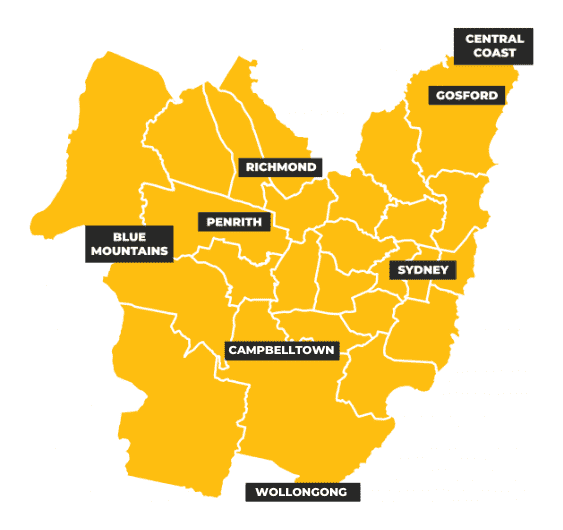
Sydney’s housing stock, particularly fibro homes in Western Sydney, Macarthur, the Inner West and the Northern Suburbs, was heavily built with asbestos-containing materials. The most common locations include bathroom walls and ceilings, garage wall cladding, eaves and soffits, laundry linings, kitchen splashbacks, roof sheeting, and fencing.
If your home was built between the 1940s and 1980s, it is very likely that at least some of these areas contain asbestos. Even homes renovated in the 1990s may still have original asbestos materials behind newer finishes.
Call us today:
Send an enquiry
We respond to enquiries within 24 hours.